When we think about how scientific theories are formed, many people imagine two extremes: either wild speculation or a straightforward logical path that deduces explanations directly from observations. The truth is far stranger and far more interesting than either of these. Scientific hypothesis formation is a creative act, not a mechanical process of applying logic to data, yet rigorous methods for evaluation temper it.
A helpful metaphor for this process comes from Plato’s Allegory of the Cave. While Plato was concerned with metaphysics, his story offers a striking parallel to the challenges scientists face when attempting to understand the natural world.
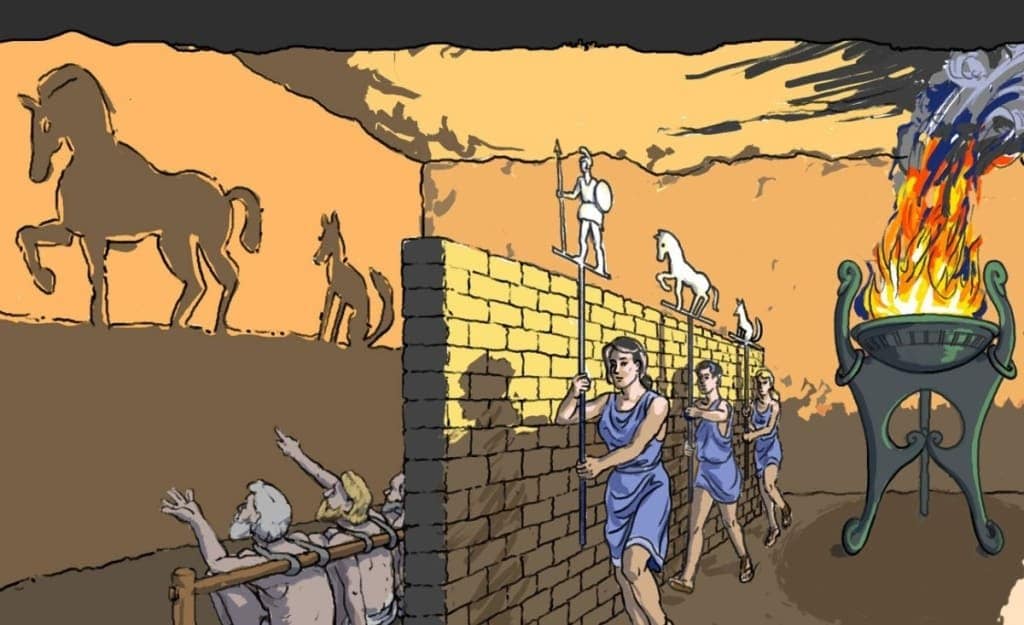
Imagine prisoners chained to the floor of a cave, able to see only the shadows cast on a wall in front of them. Behind them, unseen, are objects moving before a fire, casting shadows on that wall. Prisoners see only the shadows, not the objects themselves, and must use their imagination to infer what the objects might be.
Complicating matters, multiple objects are moving in front of the fire at any given time. The shadows on the wall blend and overlap, making it unclear which shadow corresponds to which object. To make sense of this, the prisoners may form multiple hypotheses about the nature of the objects causing the shadows.
The prisoners don’t just see static shadows—they see a constantly shifting dance of overlapping forms. Is that elongated shadow a horse’s neck, or a giraffe’s? A human arm, or a tree branch? With multiple objects moving simultaneously, the shadows blend and separate in ways that could support several competing explanations.
How, then, do they arrive at the “best explanation” for the shadows? The key is to test each hypothesis one at a time, searching for inconsistencies between the hypothesis and the observed shadows. By identifying shadows that cannot possibly result from a given hypothesis, they can rule it out. If they are fortunate, this process leaves one hypothesis standing. If not, they may face the task of refining their hypotheses or acknowledging that none of them work.
In the history of science, this process has often been described using the phrase “saving the appearances” or “preserving the phenomena.” In ancient astronomy, “saving the appearances” meant any theory that could predict what you’d actually see in the night sky. The appearances, what we directly observe in nature, are like the shadows on Plato’s cave wall. A hypothesis is a proposed explanation for the hidden causes of those appearances. To test it, we deduce conclusions (or predictions) from the hypothesis and compare them to what we observe in the real world. The better a hypothesis “saves the appearances,” the more compelling it becomes.
For example, imagine hypothesizing that one of the unseen objects in the cave is a horse. If this hypothesis is correct, it should produce certain predictable shadows. When we observe the wall, do we see those shadows? If not, we discard the hypothesis. If the shadows align, the hypothesis remains viable, for now.
The beauty of this process lies in its dual nature. The act of forming a hypothesis requires creativity, an imaginative leap to propose what might be behind the fire. But once a hypothesis is formed, its evaluation is a rigorous process of deduction and comparison to observation.
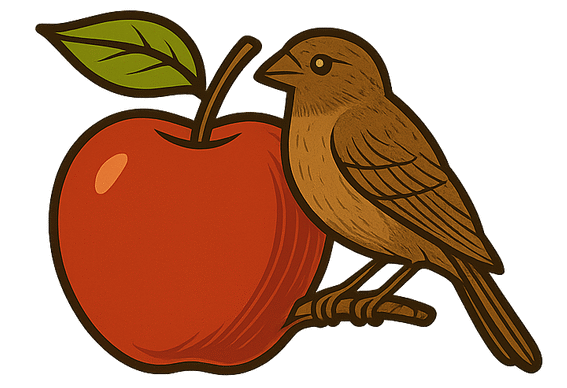
This interplay between creativity and rigor is evident in some of the greatest scientific breakthroughs. Newton, for instance, proposed a hypothesis that was anything but obvious: the force that causes an apple to fall to the ground is the same force that governs the motion of the planets. Before Newton, no one had imagined that terrestrial and celestial motions could share a common cause. His imaginative leap gave rise to the theory of universal gravitation, a framework that preserved the phenomena with remarkable precision.
Yet science is not always so tidy. Before Galileo and Kepler, there were three competing models of the solar system: the Ptolemaic geocentric model, the Copernican heliocentric model, and the Tychonic model, which blended elements of both. For a time, these models were equally successful at predicting planetary positions. They each did a pretty good job of saving the appearances, on the average. Only through further refinement and observation, Kepler’s elliptical orbits, for instance, did the heliocentric model emerge as the most parsimonious explanation.
In sum, scientific progress involves both imagination and discipline. We begin in Plato’s cave, grappling with the shadows, taking creative leaps to form hypotheses about their hidden causes. But those leaps must always return to the wall of appearances, where the shadows test our ideas. It is this delicate balance of creativity and rigor that propels science forward, transforming speculation into understanding.
Remember our students’ discovery that they couldn’t actually ‘see’ gravity? This same challenge faces every scientific theory. We’re all prisoners in Plato’s cave, watching shadows and trying to infer their hidden causes.